
Why Subcontractor Coordination Determines Project Quality
Trade sequencing and a stable bench of subcontractors shape construction outcomes more than any individual finish choice. Here is what organized subcontractor coordination actually looks like on a residential project.
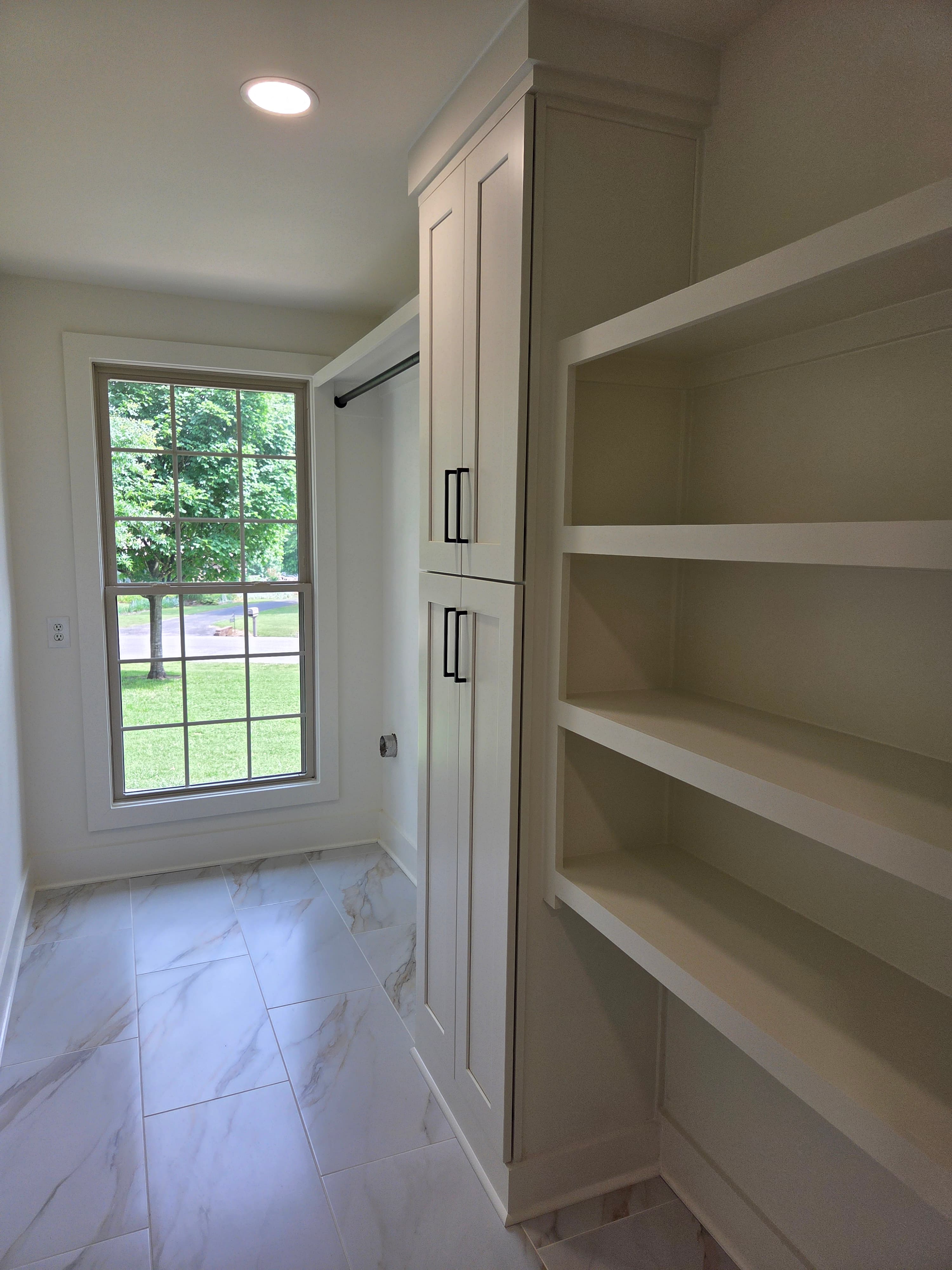
Homeowners in Middle Tennessee spend a great deal of time selecting finishes — cabinet profiles, tile patterns, fixture finishes. Those choices matter. But the single factor that most consistently determines whether a residential construction project finishes on schedule, on budget, and at a high level of quality is one most clients never see directly: subcontractor coordination. Understanding how trade management works, and why it is so consequential, helps set realistic expectations before a project begins.
What Subcontractor Coordination Actually Means
Subcontractor coordination is not simply scheduling trades on a calendar and hoping everyone shows up. It is the active management of dependencies — understanding which trade must complete its work before another can begin, communicating scope boundaries clearly, and holding each crew accountable to a shared standard.
On a typical residential remodel or new construction project, a general contractor or design-build firm works with a range of specialized trades: framing, mechanical, electrical, plumbing, insulation, drywall, tile, cabinetry, finish carpentry, painting, and more. Each trade has its own crew, its own pace, and its own tolerance for ambiguity. The project manager's job is to keep these moving parts aligned so that no trade is blocked waiting on another, and no trade creates rework for the crew that follows.
When that coordination is strong, the project flows. When it breaks down, the costs compound quickly — idle time, rescheduling fees, inspections that fail because prerequisite work was not complete, and finish work that has to be redone because it was installed out of sequence.
Trade Sequencing: The Logic Beneath the Schedule
Every construction project has a correct order of operations. That order is not arbitrary. It reflects the physical realities of how a building goes together. Rough framing precedes mechanical rough-in. Mechanical rough-in precedes insulation. Insulation precedes drywall. Drywall precedes tile and cabinetry. The sequence is load-bearing in the sense that deviating from it does not just slow things down — it creates defects that require tearing work apart.
The most common sequencing failures happen at handoff points. A plumber finishes rough-in, but the HVAC crew ran ductwork in a way that blocks access to a valve location. Now someone has to go back. An electrician rough-ins outlets before the framing is complete, and a modified wall layout means boxes need to move before insulation goes in. These are not extraordinary problems. They are predictable ones, and they are prevented by a project manager who reviews the full scope before each trade mobilizes.
In Nashville-area new construction, where project sites in growing corridors like Bellevue or Donelson often involve tight timelines and active permit windows, sequencing errors cost more than time. They can push inspections, delay certificate of occupancy, and create downstream scheduling conflicts with other trades who had firm commitments elsewhere.
Why a Stable Bench of Subcontractors Matters
Not all subcontractors are interchangeable. The difference between a trade partner who has worked with a general contractor on twenty projects and one who is new to the working relationship shows up in subtle but important ways.
Established trade partners understand the standard of work expected. They know how the project manager communicates, how changes are documented, and what the inspection thresholds are for a given jurisdiction. They show up with the right materials, flag issues early, and coordinate directly with adjacent trades without needing to be prompted.
A general contractor or design-build firm that maintains a stable, vetted bench of subcontractors is able to staff projects with crews that have a track record rather than an unknown one. That consistency translates directly to predictability — predictable timelines, predictable quality, and fewer surprises during the walkthrough phase.
This is one of the structural advantages of a design-build model. Because design and construction are managed under one accountable team from the start, the subcontractor bench is selected and maintained with the full project scope in mind, not assembled project by project from whoever is available.
How Coordination Failures Become Quality Problems
The connection between poor trade coordination and poor finished quality is direct, even when it is not obvious to a homeowner looking at the final product. Grout lines that are inconsistent often trace back to tile being installed before the substrate was fully cured or properly prepared by the previous trade. Paint finish problems frequently originate with drywall texture applied under the wrong conditions, or primer coats skipped because the painting crew was rushed in to meet a schedule that had already slipped.
Coordination failures create pressure. When a project falls behind because one trade was late or out of sequence, subsequent trades get compressed into shorter windows. Compressed timelines produce shortcuts. Shortcuts produce defects. The homeowner sees the defect; they rarely see the chain of events that produced it.
Organized execution means building enough structure into the schedule that each trade has the time and conditions it needs to do its work correctly. That requires a project manager who is actively tracking the sequence, not just reacting to problems after they emerge. It also requires clear scope documentation at the start — so there is no ambiguity about who is responsible for each element of the handoff. You can read more about what that upfront process looks like on our about page.
What Clients Can Look for When Evaluating a Contractor
Subcontractor coordination is invisible during a sales conversation, which makes it difficult to evaluate from the outside. But there are signals worth looking for.
- Does the firm use the same core trade partners across projects, or does it assemble a new crew for every job?
- Can the project manager explain the trade sequence for your specific scope — not generically, but in terms of your actual project?
- How are scope changes communicated to subcontractors? Is there a documented process, or does it happen informally?
- What happens when a trade completes work that does not meet standard? Is there a reinspection process?
These questions surface process. A firm with organized execution will have clear answers. A firm that manages coordination loosely will give vague ones.
Coordination Across Jurisdictions in Middle Tennessee
Residential construction in Middle Tennessee involves multiple permitting jurisdictions, each with its own inspection cadence. Metro Nashville, Williamson County, Wilson County, and Sumner County all have different workflows for scheduling inspections and processing permit amendments. A project manager who coordinates trades without accounting for those inspection windows creates a situation where work is complete but cannot be covered up until an inspector signs off — and inspectors in busy permit periods are not always available on short notice.
Effective trade coordination means building inspection milestones into the schedule, not treating them as interruptions to it. That requires knowing the local permitting environment, not just the general principles of construction sequencing. It is the kind of jurisdictional fluency that comes from working consistently in a region, not from applying a generic project management framework.
Working with Peerless
At Peerless Development, subcontractor coordination is not a back-office function. It is a core part of how we manage projects from pre-construction through final delivery. Our approach is built on a stable bench of vetted trade partners, structured communication at every handoff point, and project managers who know the sequencing requirements for each scope type we build.
That organized execution is what allows us to hold quality standards through the full length of a project — not just in the finish selections our clients choose, but in every layer of work that sits beneath them. If you are planning a remodel or new construction project in Middle Tennessee and want to understand how we structure the trade coordination process for your specific scope, reach out through our contact page. We are glad to walk through the process before any commitment is made.
Considering a remodel, addition, or new build in Middle Tennessee?
We run residential design-build engagements from concept through completion under one accountable team. Send us a project inquiry and we'll review next steps.
Related Articles
Reading a Construction Schedule: What the Document Actually Tells You
A residential construction schedule is more than a list of dates. Learn how to read milestones, understand the critical path, and interpret weekly updates on your Middle Tennessee build or remodel.

Permitting a Home Addition in Nashville: The Process Explained
Adding onto your Nashville home involves more than design and construction. This guide walks through the Metro Codes permitting process, historic overlays, HOA review, and how aligned planning keeps projects on schedule.
Design-Build vs. Architect-Plus-Contractor: Which Model Fits Your Tennessee Project
A practical comparison of the two most common ways to deliver a residential remodel or custom home — and how to decide which model fits the project you have in mind in Middle Tennessee.