
Primary Suite Remodel Realities: What's Behind the Walls in Middle Tennessee Homes
A primary suite remodel in Middle Tennessee often surfaces hidden conditions behind walls and beneath floors. Here's what to expect and how to plan for it.
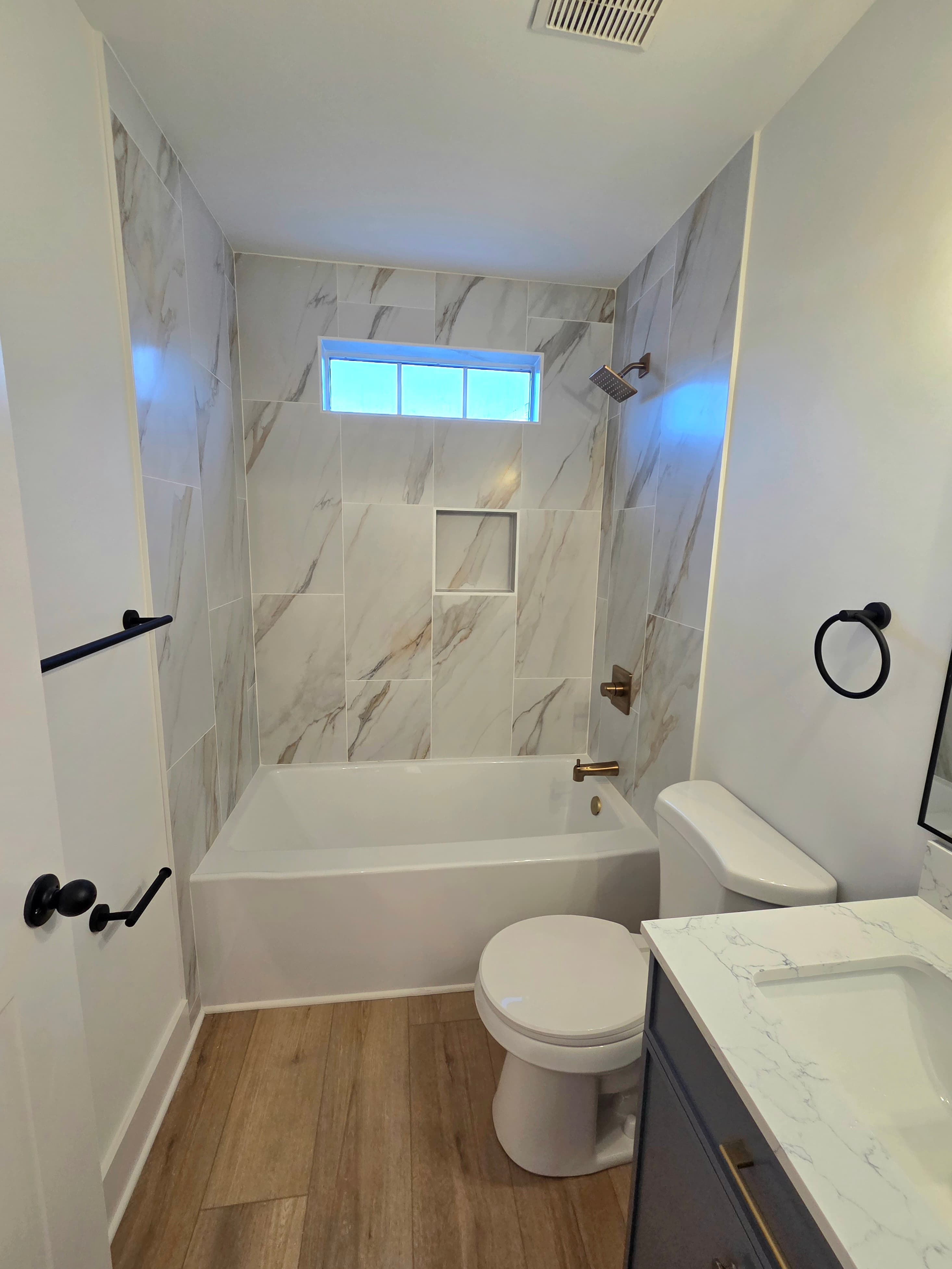
Homeowners planning a primary suite remodel in Middle Tennessee often come into the project with a clear picture of the finished result — new tile, a walk-in shower, updated fixtures — but a less complete picture of what the construction process actually involves. In many Nashville-area homes and across Williamson, Wilson, and Sumner counties, decades of settling, moisture, and previous work leave conditions behind the walls and beneath the floors that shape the entire scope of a remodel. Understanding those realities before work begins is the difference between a predictable project and a costly series of surprises.
Why Primary Suite Remodels Surface More Hidden Conditions Than Almost Any Other Room
Bathrooms concentrate everything that creates risk in a home: water supply lines, drain lines, exhaust ventilation, and continuous moisture exposure from showers and baths. The primary suite bathroom amplifies that exposure because it tends to be one of the most-used rooms in the house. By the time a homeowner is ready to remodel, years of daily use have often left behind conditions that were invisible until the first layer of tile or drywall comes off.
This is not a Middle Tennessee-specific problem, but the region's climate makes it worse. High humidity across the Nashville metro and surrounding counties puts constant pressure on moisture control systems that were often undersized or installed with products that have since been superseded by better materials. When conditions are less than favorable, moisture finds its way into substrates, cavities, and structural members in ways that only become apparent during demolition.
The point is not to discourage anyone from proceeding. It's to establish that a primary suite remodel is a construction project — not a cosmetic refresh — and should be planned accordingly.
What's Typically Behind the Walls
In homes built before the mid-1990s across Middle Tennessee, greenboard drywall was the standard backer for tile in wet areas. It performed adequately in low-moisture conditions but was never truly waterproof. Behind that greenboard, insulation and framing absorbed moisture over time, particularly around the shower enclosure and any area near the tub.
When tiles are removed from these older installations, it's common to find:
- Greenboard that has softened or delaminated
- Mold or mildew growth on the back of the backer or on the face of the framing
- Framing members that have lost structural integrity due to prolonged moisture exposure
- Evidence of previous repairs — sometimes multiple rounds — that were never addressed at the source
Newer homes are not immune. Cement board and modern waterproofing membranes are better materials, but installation quality varied widely during the rapid construction expansion that reshaped communities like Franklin, Brentwood, and Spring Hill through the 2000s and 2010s. Shortcuts in waterproofing — particularly at corners, transitions, and penetrations — create slow leaks that compound over years.
Subfloor Conditions: The Variable That Drives Scope
If wall conditions create complexity, subfloor conditions drive cost. The floor beneath a primary bathroom tile installation carries every load placed on it and absorbs any water that finds its way through grout lines, failed caulk joints, or unseated fixtures. In a room that sees daily wet foot traffic, that moisture exposure is significant.
In many Middle Tennessee homes, particularly two-story construction, the primary bathroom sits above a living space or a garage. The subfloor in these locations is often plywood over floor joists — a system that performs well when dry and protected, but deteriorates when moisture penetrates consistently over time. Soft spots, delamination, and even partial joist damage are findings that come up regularly during primary suite remodels.
Before any new tile can be set, the subfloor must be assessed and, where needed, repaired or replaced. This is not optional — tile laid over a compromised subfloor will crack at the grout joints or at the tile face within months of installation, regardless of how well the tile work itself was executed. Addressing it properly at the outset adds time and cost to the project, but skipping it costs more in the long run.
Deflection is a related issue. Even a structurally sound subfloor may flex enough under load to violate the tolerances required for the tile and setting material being used. Larger-format tile — which has become a dominant choice in primary suite remodels — is particularly sensitive to subfloor deflection. Stiffening the assembly before tile installation is standard practice on well-run projects.
Vapor Barriers and Moisture Management in Tennessee's Climate
Vapor control in bathrooms is one of the most misunderstood elements of a remodel, and it matters more in Middle Tennessee than in drier climates. The region sits in a mixed-humid climate zone, which means moisture moves through building assemblies in both directions depending on the season. A vapor management strategy that works in winter may drive condensation into wall cavities in summer if it's not properly detailed.
Modern primary suite remodels in this region should incorporate a continuous waterproofing membrane in the shower enclosure, properly transitioned at every change of plane and at all penetrations. The floor assembly should be sloped correctly to the drain and treated with a compatible membrane system. Exhaust ventilation needs to be sized for the room volume and ducted fully to the exterior — not terminated in the attic, which remains a finding in older homes and some newer construction alike.
These are not features that add to a project's visual appeal. They are the infrastructure that protects everything else from failing prematurely. Getting them right is a function of planning and sequencing, not an afterthought.
How Pre-Construction Planning Changes the Equation
The single most effective tool for managing hidden conditions in a primary suite remodel is a structured pre-construction process. Rather than beginning demolition and responding reactively to whatever is found, a methodical pre-construction phase assesses known risk factors in advance and builds contingency planning into the project structure from the start.
This means reviewing available documentation on the home, including any prior permit history through Metro Codes or the relevant county authority. It means a thorough visual assessment of adjacent spaces — the ceiling below the bathroom, the wall cavities accessible from adjacent rooms — before the first tile is touched. It means having a clear conversation about scope contingencies and how they will be priced and communicated if conditions beyond the baseline are found.
Our bathroom remodeling services are built around this model. Pre-construction isn't a formality — it's where the project is actually planned. By the time demolition begins, the team has a realistic picture of what the project involves and a process for handling the unexpected without derailing the schedule or the budget. Explore our full services overview to see how this approach extends across project types.
What Homeowners Should Ask Before Work Begins
A primary suite remodel is a significant investment. Before committing to a scope, homeowners should be able to get clear answers to a short list of questions:
- How will the team assess subfloor condition before new materials are installed?
- What waterproofing system will be used in the shower, and how will transitions and penetrations be detailed?
- If hidden damage is found during demolition, what is the process for communicating it and adjusting scope?
- Is exhaust ventilation being replaced or upgraded, and where does it terminate?
- Who is responsible for coordinating the plumbing, tile, and framing work — and is there one accountable team managing that coordination?
That last question matters. Trade coordination is where most remodel problems originate. When plumbing, tile, and framing work are managed by separate parties without a single point of accountability, sequencing gaps and communication failures are common. The result is work that has to be undone or redone — adding cost and time to a project that was budgeted on the assumption things would go smoothly.
Working with Peerless
A primary suite remodel done right in Middle Tennessee accounts for what's behind the walls before it accounts for what goes on them. It treats subfloor assessment, vapor management, and plumbing coordination as core deliverables — not variables to be resolved after the fact.
Peerless Development manages primary suite and whole-bathroom remodels from pre-construction through final delivery, with one accountable team overseeing trade coordination and structured communication throughout. If you're planning a remodel in Nashville, Franklin, Brentwood, or anywhere across the region, contact us to discuss your project scope and what a pre-construction assessment would involve.
Considering a remodel, addition, or new build in Middle Tennessee?
We run residential design-build engagements from concept through completion under one accountable team. Send us a project inquiry and we'll review next steps.
Related Articles
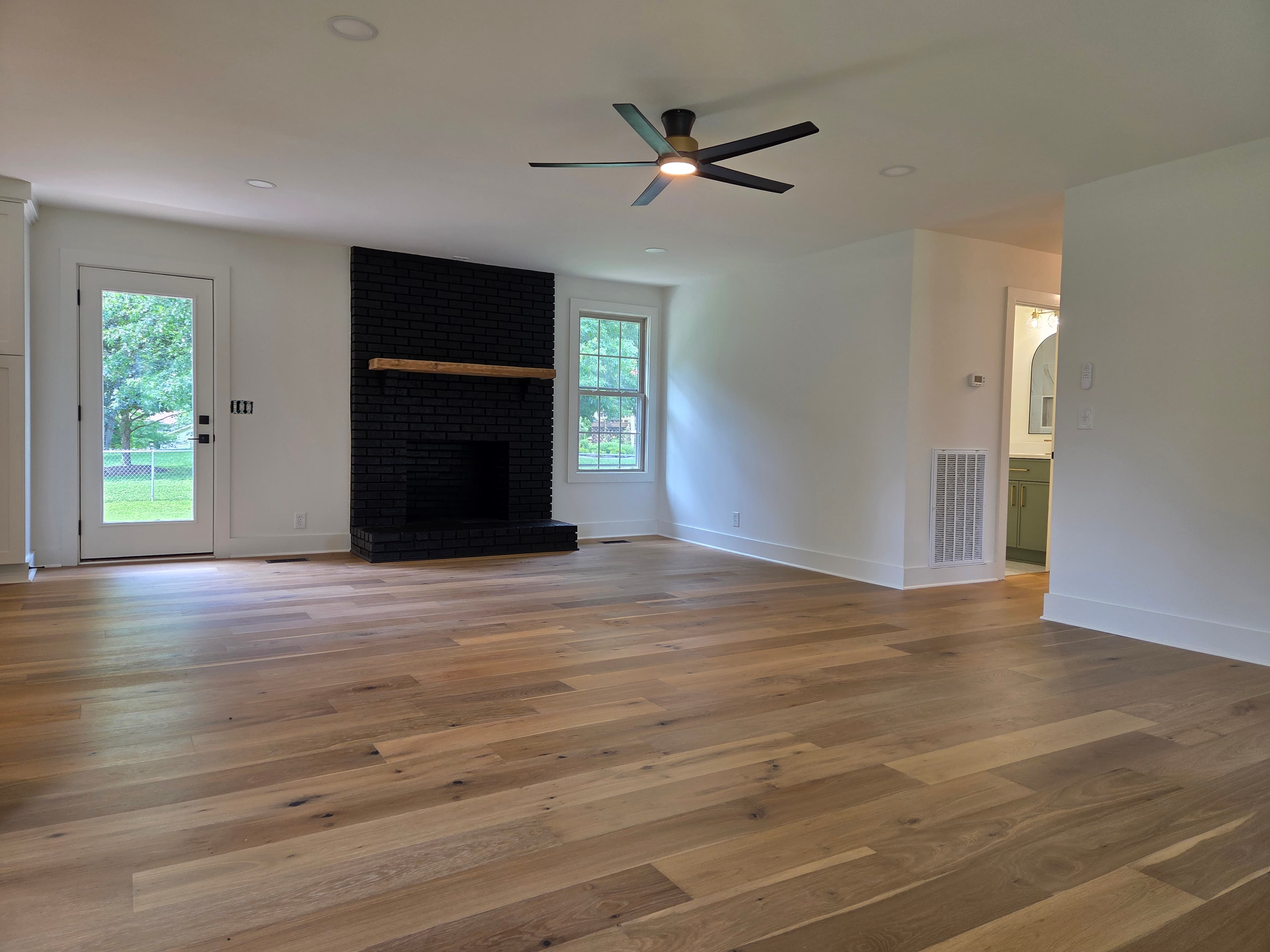
What to Expect During a Whole-Home Remodel in Middle Tennessee
A practical guide to the timeline, decision points, and homeowner experience during a whole-home remodel in Middle Tennessee — from pre-construction planning through final walkthrough.
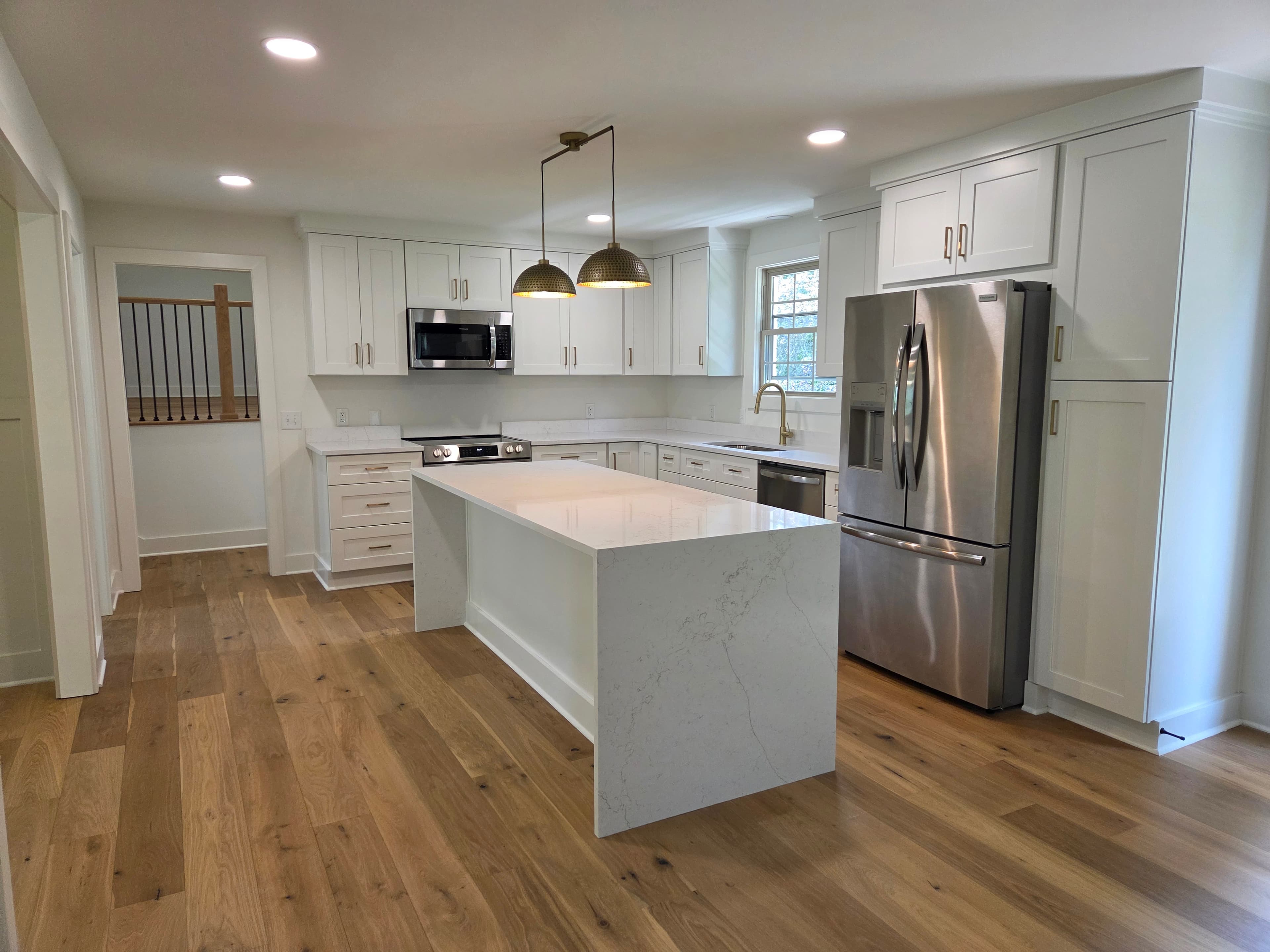
Why Kitchen Layout Should Be Decided Before Cabinet Selections
Before you choose cabinet styles or finishes, your kitchen layout needs to be settled first. Here's why sequence matters in Middle Tennessee kitchen remodels.
Kitchen Remodels in Nashville: Timeline, Permits, and What to Expect
A realistic look at how a Nashville kitchen remodel actually runs — from pre-construction through the final punch list — and what the typical timeline looks like for projects in Davidson County.